
Why Do Borewells Produce Less Water Over Time?
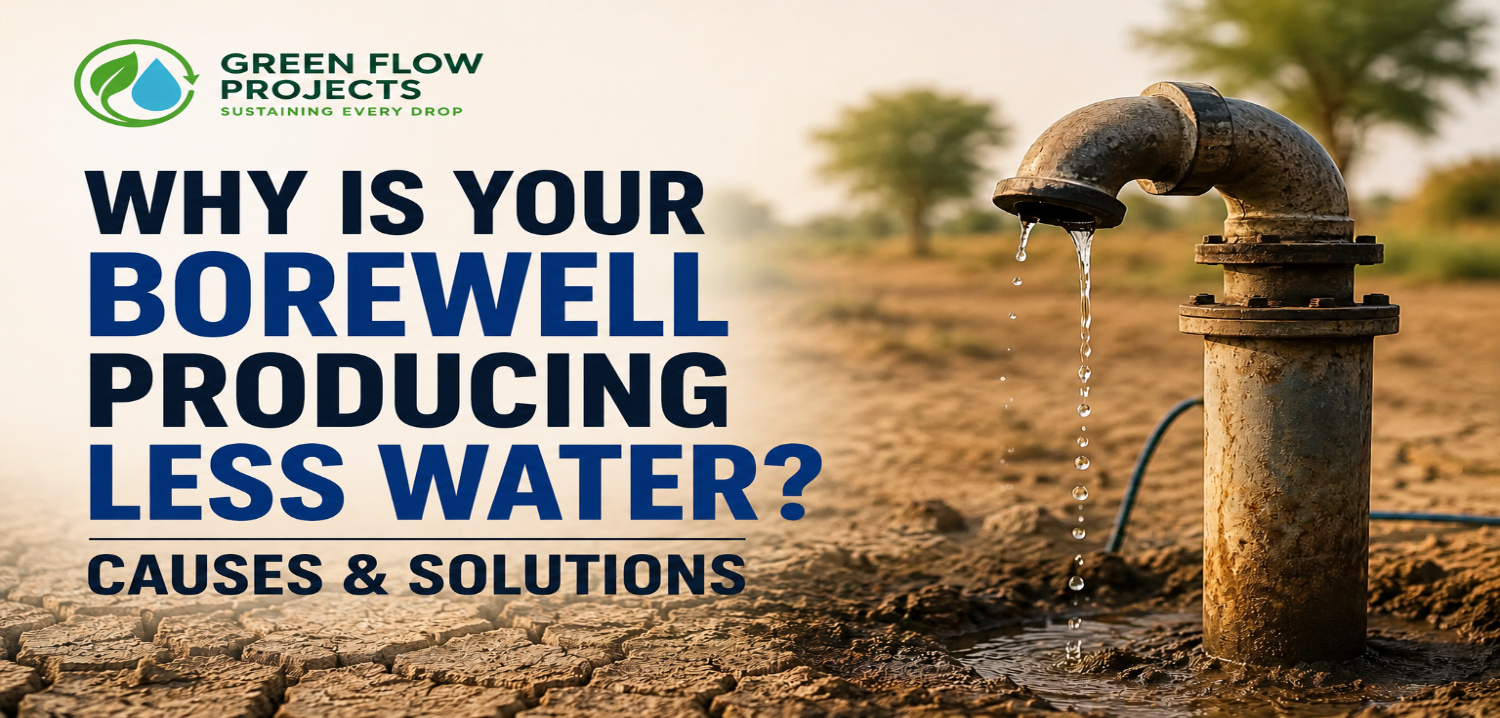
A borewell produces less water over time mainly because of falling groundwater levels, mineral or silt clogging inside the casing and screen, pump wear, or the well simply not reaching a strong enough aquifer layer in the first place.
Some of these causes are about the aquifer itself. Others are entirely mechanical and fixable without touching the water table at all.
This guide breaks down the most common reasons yield drops, how to tell which one applies to you, and what actually restores water flow.
1. Falling Groundwater Levels
This is the most common cause, especially in cities where extraction outpaces recharge. Ahmedabad is a clear example, the Central Ground Water Board’s Dynamic Groundwater Resources Report 2023 places the city’s groundwater extraction at 152% of what’s naturally available, putting it in the over-exploited category.
Regional depletion doesn’t happen in isolation either. As one well-service resource explains, human activities such as nearby construction, excessive extraction by neighboring wells, or paved surfaces can limit water reaching the aquifer, shrinking the available supply over time.
If your neighborhood has seen a lot of new construction or new borewells recently, that’s often part of the story.
2. Screen and Casing Clogging
Sediment, silt, and debris can build up inside the borewell over years of use, narrowing the pathway water travels through to reach the pump.
This is more common than most people assume. Field reports from water-scarce farming regions note that many borewells go defunct not because of aquifer depletion alone, but due to clogging, siltation, or collapse of casing pipes.
This kind of blockage is mechanical, not geological, which means it’s usually fixable without deepening the well at all.
3. Mineral Incrustation and Bio-Slime
Water with high calcium, iron, or magnesium content can leave mineral deposits, called scale, on the inside of the casing and screen. Over time this narrows the space water flows through.
The scale of this problem can be significant. One agricultural extension resource found that the combined effect of slime growth and mineral precipitation reduced well yield by as much as 75 percent within a year in some locations.
Shallow borewells and those in mineral-rich groundwater zones are more prone to this than deeper ones tapping cleaner aquifer layers.
4. Pump Wear and Poor Sizing
Sometimes the aquifer is fine and the borewell structure is fine, the pump itself is the problem. Impellers wear down with age, reducing how much water the pump can lift regardless of how much is available underground.
A pump that’s too large for the actual yield can also cause repeated cycling, drawing the water level down faster than the aquifer can recharge between pump cycles. This stresses both the pump and the borewell.
5. Overpumping and the Cone of Depression
Pulling water out faster than the aquifer replenishes it creates what hydrologists call a cone of depression, a localized dip in the water table right around the borewell. A well designed for a certain output can fail prematurely if consistently pumped beyond that rate, damaging both the well and the surrounding aquifer.
This is especially relevant for commercial or agricultural borewells running pumps for long hours daily.
6. Poor Original Construction
Sometimes low yield isn’t a new problem at all, it’s one that started on day one. A borewell drilled without a proper site survey, or one that stopped at the first water strike instead of reaching a stronger aquifer layer, may never have had strong yield to begin with.
This is why working with experienced borewell contractors in Ahmedabad at the drilling stage matters so much. Getting the depth and aquifer selection right the first time avoids yield problems that are much harder to fix later.
How to Diagnose the Real Cause
Guessing at the cause wastes money. A proper diagnosis usually involves comparing the current water level to historical records for the same borewell, along with a professional yield test.
A borewell camera inspection can also reveal visible clogging, casing damage, or structural issues without any excavation. This single step often decides whether repair or redrilling is the right path.
| Symptom | Likely Cause |
| Gradual decline over years, drop in local water table | Aquifer depletion |
| Sudden drop, water briefly returns after rest periods | Overpumping / cone of depression |
| Reduced flow, no change in water table | Screen or casing clogging |
| Low yield since installation | Poor original construction |
| Pump runs but output is weak | Pump wear or wrong sizing |
Solutions That Actually Restore Yield
The right fix depends entirely on the cause. Here’s what typically works for each:
- Clogged screen or casing: air jetting or compressor cleaning to clear silt and debris
- Mineral incrustation: mild acid or chemical flushing to dissolve scale buildup
- Collapsed or damaged casing: re-casing or re-lining with new PVC or steel pipe
- Aquifer depletion at current depth: deepening the borewell to tap a lower aquifer layer, after a geological survey
- Pump-related issues: servicing or replacing the pump with a correctly sized unit
A field project in Karnataka’s Kolar district showed how effective mechanical fixes can be, farmers restored more than 1,500 borewells using air jetting and recharge pits, with over 60 percent success, according to a 2022 IWMI report.
When Redrilling Makes More Sense
If a camera inspection shows severe structural collapse, or if the aquifer at the current depth is genuinely exhausted, repair work won’t help much. At that point, deepening the existing borewell or drilling a new one becomes the more realistic option.
A team offering proper borewell drilling services in Ahmedabad should run a fresh site survey before recommending this route, rather than defaulting to it without checking whether the existing structure can be salvaged.
Frequently Asked Questions
Can a low-yield borewell be fixed without redrilling?
Often yes. If the cause is clogging, scale buildup, or pump wear rather than a fully depleted aquifer, cleaning or servicing usually restores much of the lost yield.
How do I know if the problem is the aquifer or the borewell itself?
A yield test combined with a camera inspection is the most reliable way to tell. Aquifer issues show up as a genuine drop in water table level; mechanical issues don’t.
Does deepening a borewell always work?
Not always. It depends on whether a viable aquifer layer exists below the current depth, which a geological survey should confirm before drilling further.
How often should scale buildup be checked?
An annual inspection is reasonable for most borewells, especially in areas with hard or mineral-rich groundwater.
Can overpumping permanently damage a borewell?
Yes, sustained overpumping can accelerate sediment movement, clogging, and corrosion, shortening the borewell’s usable life.
Is low yield always related to a citywide groundwater problem?
Not always. Many low-yield complaints trace back to a mechanical issue like clogging or pump wear rather than a shrinking aquifer, so it’s worth diagnosing before assuming the worst.
Key Takeaways
- Borewell yield can drop due to aquifer depletion, clogging, mineral scale, pump wear, or overpumping
- Mechanical causes like clogging are usually fixable without redrilling
- A yield test and camera inspection together give the most accurate diagnosis
- Poor original construction can cause low yield from day one, which is why proper site surveys matter at the drilling stage
- Redrilling or deepening should only follow a proper geological survey, not guesswork
Conclusion
A drop in borewell water isn’t always a sign the aquifer has run dry. More often, it’s a fixable mechanical issue, clogging, scale, or pump wear, that a proper inspection can identify. Getting an accurate diagnosis before deciding on repair or redrilling saves both money and water. Green Flow Projects can assess your borewell and recommend the right next step based on what’s actually causing the drop.