
How Do You Know a Borewell Needs Repair?
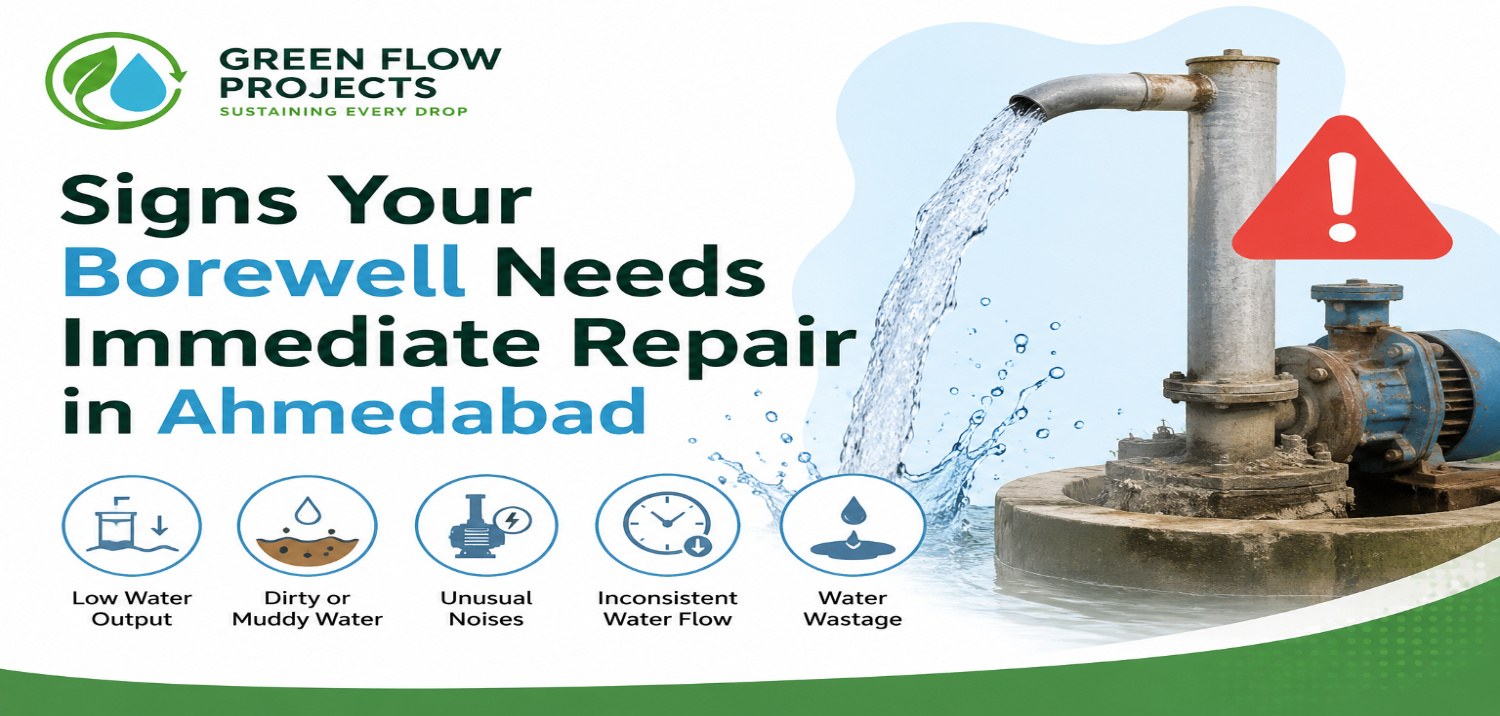
A borewell needs immediate repair when you notice a sudden drop in water flow, sandy or discolored water, unusual pump noise, frequent electrical tripping, or a spike in your power bill. Any one of these points to a problem that gets worse, and more expensive, the longer it’s ignored.
Borewells rarely fail without warning. Most breakdowns follow a pattern of smaller symptoms that show up weeks or months before the water stops altogether.
This guide walks through exactly what to watch for, what usually causes it, and when to call in professional borewell repairing services in Ahmedabad instead of waiting it out.
1. Sudden Drop in Water Yield
A noticeable drop in discharge is usually the first sign something is wrong. Water that used to fill a tank in twenty minutes now takes an hour, or the pump runs longer than usual to deliver the same output.
This often points to reduced groundwater inflow, a partially blocked screen, or pump wear. As one pump specialist guide notes, a unit that keeps starting and stopping repeatedly can signal low-level flow protection kicking in due to reduced inflow, which is worth investigating before the motor takes damage.
A yield test can confirm whether the drop is genuinely from the aquifer or from something mechanical inside the borewell itself.
2. Sand or Sediment in the Water
Sand pumping is one of the most common borewell complaints, and it’s rarely harmless. It usually means the casing has cracked, the well screen has failed, or the gravel pack around the borehole has shifted.
Left unaddressed, sand does real damage to your equipment. Sand and fine silt particles cause wear on impellers, bearings, and seals, leading to reduced pump efficiency and early failure, so what starts as gritty water can end with a burnt-out motor.
A technician can usually tell whether the fix is a proper strainer, a gravel pack repair, or a full recasing job.
3. Discolored, Smelly, or Bad-Tasting Water
Muddy, yellowish, or metallic-tasting water is a contamination signal. Common causes include a cracked casing letting in surface runoff, corroded pipes, or iron and mineral buildup inside the system.
Corrosion is a frequent culprit, corroded pipes can lead to leaks, bursts, and a metallic taste from rust or dissolved metals entering the water. This isn’t just a nuisance; contaminated water affects everything from drinking use to appliance life.
If the smell or color changed suddenly rather than gradually, treat it as urgent and get the water tested before using it for drinking or cooking.
4. Unusual Pump Noise or Vibration
Submersible pumps sit deep underground and should run quietly. Grinding, rattling, or humming noises at the wellhead almost always mean something mechanical has gone wrong.
These sounds can come from sediment entering the pump or from cavitation, a condition where air bubbles form due to low water levels. As one well-service guide puts it, submersible pumps should be silent, so any noise heard at the wellhead suggests trouble.
Catching this early usually means a component replacement. Ignoring it usually means replacing the whole pump.
5. Frequent Tripping or Motor Overheating
A pump that keeps tripping the circuit or runs hot to the touch is working under more strain than it should. Overheating, frequent tripping, and low output are among the clearest borewell failure symptoms.
Common causes include low voltage, blocked discharge lines, overloaded operation, or the pump running dry due to insufficient water. A voltage stabilizer and proper dry-run protection often prevent repeat failures once the underlying cause is fixed.
6. Rising Electricity Bills Without Explanation
A motor that’s struggling, because of worn bearings, sediment buildup, or reduced water levels, draws more current to deliver the same amount of water. If your power bill has climbed without a change in usage, the borewell pump is a reasonable place to check.
This is a signal worth acting on quickly, since a motor drawing excess current is usually close to failing outright.
7. Visible Casing Damage
If you can see cracks, rust, or misalignment in the visible casing above ground, assume there’s likely similar damage below the surface too. Casing protects the borehole structure and keeps contaminants out.
A borewell camera inspection is the most reliable way to check casing condition below ground without excavation. It’s a small cost that can prevent a much larger repair bill later.
Quick Self-Check Checklist
Run through this list if you suspect your borewell needs attention:
☐ Water flow has dropped noticeably compared to a few months ago
☐ Water looks sandy, muddy, or discolored
☐ Water smells or tastes different than usual
☐ Pump makes grinding, rattling, or humming noises
☐ Circuit trips frequently or the motor feels hot
☐ Electricity bill has increased without a usage change
☐ Visible casing shows cracks, rust, or damage
Two or more checked boxes means it’s time to call a professional rather than wait.
Repair vs. Redrilling: How to Decide
Not every problem means starting over. Sand ingress, pump issues, and minor casing damage are usually repairable. A borewell camera inspection helps confirm whether the underlying structure is sound enough to repair or whether redrilling makes more sense.
| Situation | Usual Fix |
| Sand in water, casing intact | Strainer or gravel pack repair |
| Pump noise, low yield | Pump service or replacement |
| Cracked casing, structure sound | Recasing or casing repair |
| Severe structural collapse | Redrilling usually required |
Getting an accurate diagnosis matters here, since guessing wrong means paying twice. Reliable borewell repairing services in Ahmedabad should inspect before quoting, not the other way around.
Frequently Asked Questions
How urgent is sand in borewell water?
It should be treated as urgent. Sand accelerates pump wear and often signals casing or screen damage that gets worse over time.
Can a low-yield borewell be fixed without redrilling?
Often yes. Flushing, gravel pack repair, or deepening the existing borewell can restore yield in many cases, depending on what a camera inspection reveals.
Why does my borewell pump keep tripping the circuit?
Common causes include low voltage, blocked discharge lines, or the motor running under strain. A technician can pinpoint the exact cause with a load test.
How often should a borewell be inspected?
An annual check is reasonable for most residential borewells, with more frequent checks for commercial or heavily used ones.
Is discolored water always a sign of a problem?
Usually yes, especially if the change is sudden. It can point to contamination, corrosion, or casing damage, so it’s worth having the water tested.
What does a borewell camera inspection involve?
A waterproof camera is lowered into the borewell to check casing condition, water level, and any visible blockages, without needing to excavate the site.
Can rising electricity bills really be linked to borewell problems?
Yes. A motor working harder than it should, due to wear, sediment, or reduced water levels, draws more current, which shows up on your power bill.
Key Takeaways
- A sudden drop in water yield is often the earliest warning sign of a borewell problem
- Sandy or discolored water usually points to casing, screen, or gravel pack damage
- Unusual pump noise, tripping, or overheating should never be ignored
- Rising electricity bills can indicate a motor working harder than it should
- A camera inspection helps decide between repair and redrilling before you spend money
Conclusion
Most borewell failures give warning signs weeks before the water stops completely. Catching a drop in yield, sandy water, or pump noise early usually means a straightforward repair instead of a full redrilling job.
If you’re noticing any of these signs, it’s worth getting a proper inspection rather than waiting for the problem to get worse. Green Flow Projects can assess your borewell and recommend the right fix based on what’s actually happening below ground.