
Water scarcity is becoming one of the biggest environmental and economic challenges across cities and communities. Rapid urbanization, groundwater depletion, and unpredictable weather patterns are increasing pressure on existing water resources. As businesses and homeowners search for long-term solutions, rainwater harvesting installation has emerged as one of the most practical and sustainable approaches.
At Green Flow Projects, sustainable infrastructure and efficient water management solutions are central to creating greener communities. Rainwater harvesting is not just a conservation strategy—it is an investment in resilience and environmental responsibility.
Why Every Drop Matters?
Freshwater resources are limited, yet demand continues to rise. Large quantities of rainwater that could be reused often flow directly into drains and stormwater systems. Capturing and storing rainwater creates opportunities to reduce dependence on municipal supply systems while supporting environmental sustainability.
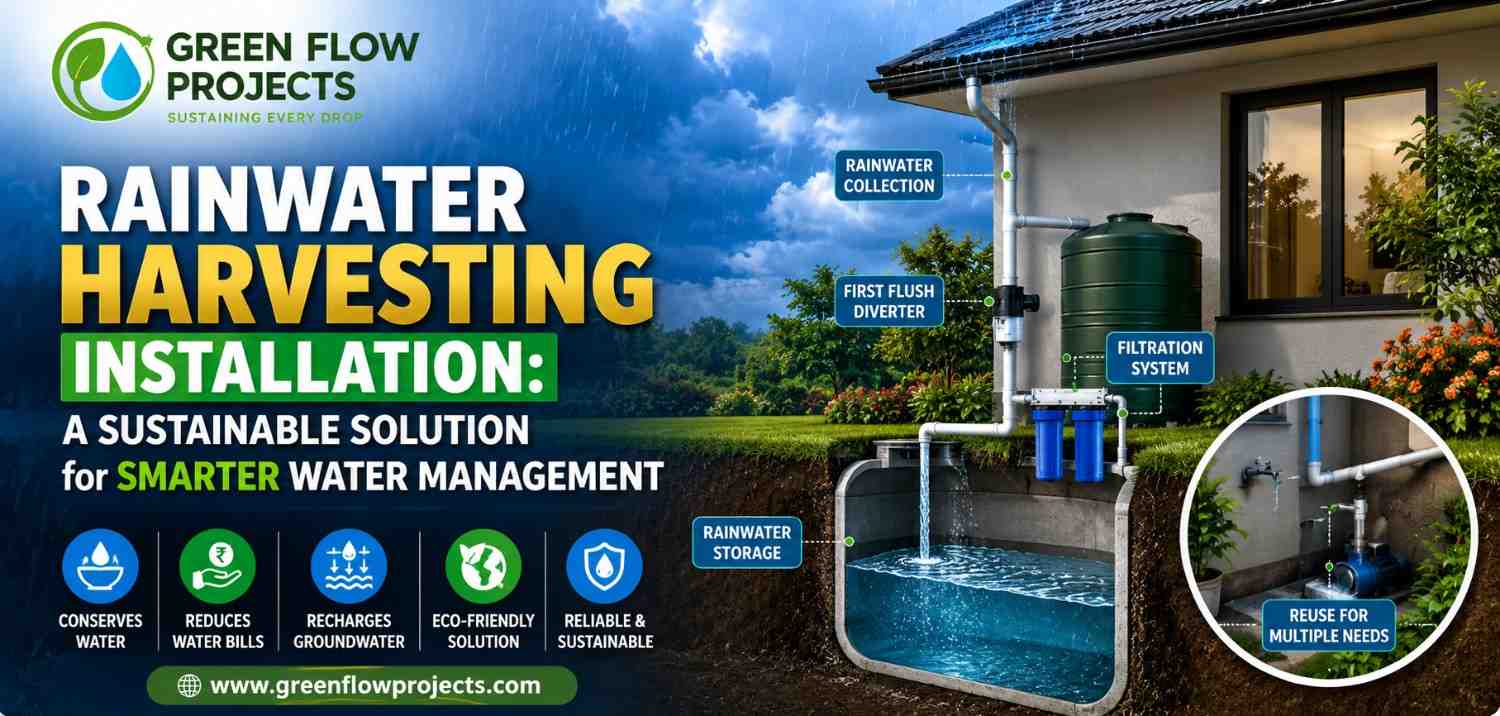
A professionally designed rainwater harvesting installation can collect, filter, store, and redistribute rainwater for multiple uses.
What Is Rainwater Harvesting?
Rainwater harvesting is the process of collecting rainwater from rooftops, paved areas, or other catchment surfaces and storing it for future use. Instead of allowing rainfall to become runoff, systems channel water into storage tanks or recharge structures.
Collected water can support:
- Landscape irrigation
- Gardening
- Toilet flushing
- Industrial processes
- Cleaning activities
- Groundwater recharge
- Emergency water reserves
How Rainwater Harvesting Installation Works?
A complete rainwater harvesting system includes several components working together.
1. Catchment Area
The rooftop or designated collection surface captures rainwater.
2. Gutters and Downpipes
Water is directed from collection areas into transport channels.
3. Filtration System
Leaves, debris, and contaminants are removed before storage.
4. Storage Tanks
Collected water is stored in underground or above-ground tanks.
5. Recharge Structures
Excess water can be directed to recharge pits or groundwater systems.
6. Distribution System
Stored water can be reused for various residential, commercial, or industrial applications.
Benefits of Rainwater Harvesting Installation
Reduced Water Bills
Using harvested rainwater decreases dependency on external water sources and reduces utility expenses.
Groundwater Recharge
Recharge systems help restore underground water reserves and improve long-term water availability.
Flood Risk Reduction
Capturing rainfall reduces stormwater runoff and minimizes urban flooding.
Environmental Sustainability
Rainwater harvesting conserves natural resources and lowers environmental impact.
Improved Water Security
Stored water creates a reliable reserve during periods of water shortage.
Types of Rainwater Harvesting Systems
Rooftop Rainwater Harvesting
This is the most common method where rainwater is collected directly from building rooftops.
Surface Runoff Harvesting
Rainwater flowing over land surfaces is captured and stored.
Groundwater Recharge Systems
Water is redirected into recharge wells or pits to replenish aquifers.
Underground Storage Systems
Ideal for urban developments with space limitations.
Rainwater Harvesting for Residential and Commercial Projects
Modern developments increasingly integrate rainwater systems into infrastructure planning. Homes, office buildings, schools, factories, hospitals, and commercial facilities can all benefit from strategic installation.
For businesses and large-scale developments, a customized rainwater harvesting installation ensures optimized water capture and maximum long-term efficiency.
Common Challenges and Solutions
Water Quality Concerns
Proper filtration and maintenance ensure safe and usable water.
Storage Capacity Planning
Tank sizing should match local rainfall patterns and demand.
Maintenance Requirements
Regular inspection of pipes, gutters, and filters helps maintain system efficiency.
Space Constraints
Underground systems provide practical solutions for limited spaces.
Getting Started with Rainwater Harvesting
Before beginning installation, consider:
- Local rainfall levels
- Roof area and collection capacity
- Intended water usage
- Storage requirements
- Filtration needs
- Maintenance planning
Professional design and implementation can significantly improve performance and system lifespan.
Building a Sustainable Future
Water conservation is no longer optional—it is a necessity. Sustainable infrastructure solutions are helping communities adapt to growing environmental challenges.
A well-designed rainwater harvesting installation supports cost savings, environmental protection, and long-term water security. By integrating intelligent water management practices today, businesses and communities can build a stronger and more sustainable future.
Green Flow Projects continues to support innovative environmental solutions that contribute toward efficient water use and responsible development.
Frequently Asked Questions
How much rainwater can be collected?
Collection depends on rainfall levels, roof area, and system efficiency.
Can harvested rainwater be used indoors?
Yes, with appropriate filtration and treatment.
Is maintenance difficult?
Routine cleaning and inspections are generally sufficient.
Is rainwater harvesting cost-effective?
Long-term savings and environmental benefits often outweigh installation costs.